
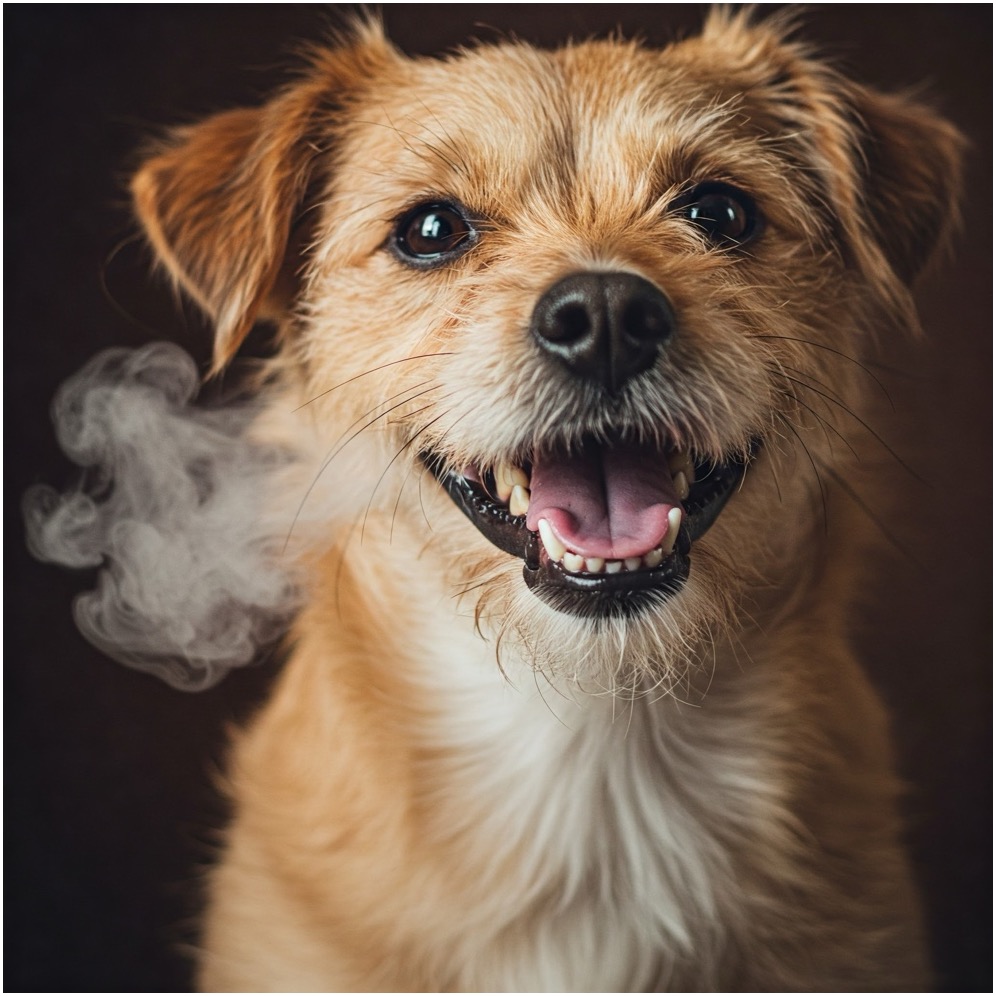
Bad breath in dogs, also known as halitosis, is a common problem that can have several causes. Although a slight odor may be normal, particularly unpleasant breath may indicate underlying health problems.
Causes of bad breath in dogs:
👅Poor oral hygiene: The buildup of plaque and tartar is the most common cause. Bacteria in the mouth produce volatile substances that cause bad odor.
👅 Dental problems: Gingivitis, tooth decay, and abscesses can contribute to bad breath.
👅Diet: Certain foods, such as moist foods or food debris stuck between teeth, can promote bacterial growth.
👅Health problems: In rare cases, bad breath can be a symptom of systemic diseases such as diabetes, kidney failure, or liver failure.
👅Coprophagia: Eating feces can cause particularly unpleasant breath.
Remedies and solutions:
👅Oral hygiene: Brush your dog's teeth regularly with a toothpaste specifically designed for veterinary use.
👅Feeding: Choose dry kibble, which helps remove plaque, and provide chew toys to promote teeth cleaning.
👅Professional cleaning: Have your pet's teeth cleaned regularly by a veterinarian, especially if tartar builds up.
👅Veterinary checkup: If bad breath persists despite good oral hygiene and a proper diet, it is important to consult your veterinarian to rule out any underlying health issues.
When to be concerned:
✅Particularly unpleasant and persistent bad breath.
✅ Bleeding gums.
✅Difficulty chewing or swallowing.
✅Loss of appetite.
✅Other symptoms such as vomiting, diarrhea, or lethargy.
Helpful tips:
❕ Get your dog used to oral hygiene from puppyhood.
❕ Use specific products for canine oral hygiene, avoiding toothpaste intended for human use.
❕ Offer your dog fresh, clean water.
❕ Check your dog's mouth regularly for any abnormalities.